


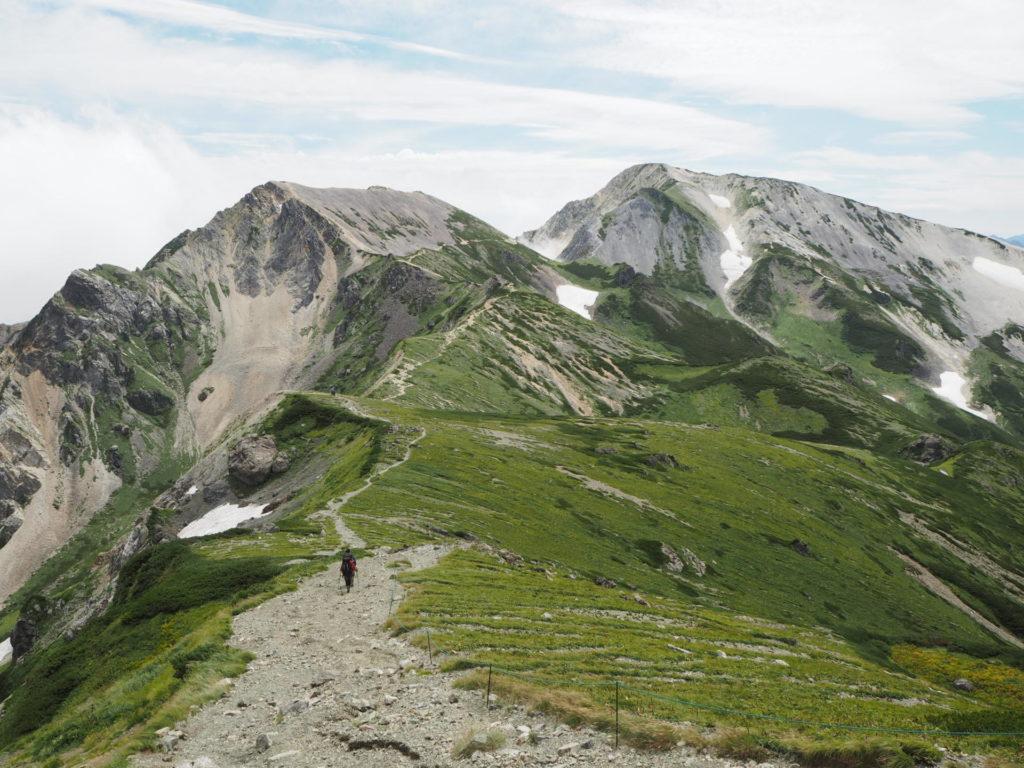
Long before hiking in Japan was a leisure pursuit, it was a form of worship. Yamabushi — mountain ascetics — climbed these peaks not for the view but for the ordeal, believing the mountains themselves held spiritual power that could be earned only through hardship. That inheritance is still there, quietly, under every modern trail: the weathered jizo statues marking a pass, the shrine bell at a summit you’re meant to ring, the ryokan at a trailhead where a hot bath and a home-cooked meal wait for you exactly when your legs need them most. Add British missionary and mountaineer Walter Weston — who did more than anyone to introduce the “Japan Alps” name to the Western world in the 1890s — and modern icons like the Miura family, who kept pushing what was possible on Japan’s peaks well into old age, and you start to understand hiking in Japan as a living tradition, not a trend.
This guide covers where to go, when to go, and what to know before you lace up — whether you’re chasing a single iconic day hike, walking Japan one region at a time, or building a multi-day trek through the mountain heartland.
Why Hike in Japan
Japan packs an extraordinary range of hiking into a compact footprint: 3,000-meter alpine ridgelines within day-trip distance of Tokyo, centuries-old pilgrimage routes through cedar forest, volcanic peaks you can summit and descend before dinner, and a trail culture built around mountain huts, onsen villages, and trailhead food that turns the descent into as much of a reward as the summit. It’s also, refreshingly, a country that has mapped, marked, and maintained its mountains for generations — trail signage is generally excellent, and Japan’s tradition of the “Hyakumeizan,” the 100 Famous Mountains selected by writer Kyuya Fukada in 1964, has given generations of hikers, Japanese and foreign alike, a lifelong checklist to work through.
Japan’s Best Regions for Hiking
The Japan Alps and Nagano: Japan’s Hiking Heartland
Nagano Prefecture is where Japan’s alpine hiking reputation was built, and it remains the country’s deepest concentration of serious mountain trails. The Kita (Northern) Alps hold Japan’s most dramatic ridgeline hiking, covered in our account of conquering the Kita Alps ridges, while the Panorama Ginza Trail, detailed in Trekking the Panorama Ginza Trail, is one of the classic multi-day traverses of the range. For something gentler, the historic Nakasendo — the old Edo-period road connecting Kyoto and Tokyo — offers a very different kind of trail experience, walking through preserved post towns rather than above the treeline; see Nakasendo: A Flash from the Past. Nagano is also home to genuine long-distance thru-hiking, via the Shinetsu Trail.
Mt. Fuji and Around Tokyo
No conversation about hiking in Japan skips Mt. Fuji, and for good reason — but the standard summit push during the short official climbing season is only one way to experience it. Our feature Mt. Fuji: The Path Less Traveled and Scaling Fuji in Spring both look at quieter ways to approach the mountain. You don’t have to leave the city for a proper day of hiking in Tokyo, either — the metro area backs directly onto excellent trails, from Hakone’s forested ridgelines, covered in Three Days Exploring Hakone’s Trails, to the wider shortlist in Day Hikes from Tokyo.
Kumano Kodo and the Kansai Pilgrimage Trails
The Kumano Kodo, a network of pilgrimage routes through the Kii Peninsula’s mountains, is one of only two UNESCO World Heritage-listed pilgrimage trail networks on Earth, alongside Spain’s Camino de Santiago. It’s trekking with a spiritual throughline: forested passes connecting three grand shrines, walked by pilgrims for over a thousand years. We’ve covered several of its lesser-known stretches in Uncovering the Hidden Flow of the Kumano Kodo Iseji and Kumano’s Path Less Traveled.
Shikoku: The 88 Temple Pilgrimage
Shikoku’s 88 Temple Pilgrimage, the Ohenro, is Japan’s other great long-distance walking tradition — roughly 1,200 kilometers circling the island, traditionally completed in white pilgrim’s dress. You don’t need to walk the whole route to experience it; our Shikoku Henro Highlights breaks down the sections worth prioritizing, and Kochi, a Nature Paradise in Shikoku covers the wilder, less-visited side of the island beyond the pilgrimage route itself.
Hokkaido and Tohoku: Wilder, Quieter Trails
North of the well-trodden Nagano and Kansai routes, Hokkaido and Tohoku offer a rawer, more solitary hiking experience — bigger wildlife encounters, fewer huts, longer approaches. Iwate-san’s volcanic profile is one of Tohoku’s most recognizable, detailed in Iconic Iwate-san, while Tracking Akita’s Matagi Hunters follows the region’s traditional hunting culture into terrain few hikers ever see. For a broader regional sweep, see Northern Tohoku’s Top 5 Spring Hikes and, further north, Hokkaido’s Garden of the Gods.
Kyoto, Izu, and the Southern Islands
Not every trail in Japan requires a multi-day commitment. The coastal Oni Trail near Kyoto, covered in The Oni Trail: Hiking Coastal Kyoto, and the Izu Peninsula’s mix of hiking and cycling terrain in Hiking and Cycling in Izu’s Adventure Capital are both accessible weekend trips. Further south, the subtropical trails of Iriomote hold a completely different ecosystem — see our Iriomote’s Endangered Wildcats feature and companion Iriomote Activity Guide.
When to Hike in Japan
Japan’s hiking season is defined as much by what’s growing and blooming as by temperature. Spring brings sansai, wild mountain vegetables foraged along the trail — a tradition we cover in Spring Sansai — along with the last of the region’s cool-weather trails before summer heat sets in. Summer opens the high alpine routes above 2,500 meters, where snow lingers into June in a normal year, and is prime season for multi-day treks in the Japan Alps. Autumn brings koyo, the famous foliage season, arguably the single best month-and-a-half for hiking in Japan, especially in Nagano and Tohoku — see Autumn Hiking in Northern Nagano. Winter closes most alpine trails to all but experienced, properly equipped mountaineers, though lower-elevation and coastal hikes remain accessible year-round, as covered in Cool Summer Trails.
Trail Culture: Huts, Onsen, and Trail Etiquette
One of the most distinctive things about hiking in Japan is what happens off the trail. Mountain huts (yamagoya) along popular routes offer meals and dormitory-style beds, meaning multi-day treks in the Japan Alps rarely require carrying a tent. Trailhead towns are frequently built around a hot spring, turning the end of a hike into a ritual of its own — a pairing captured well in Hiking Hearth to Hearth and Summertime Fun in Shiga Kogen. Trail etiquette matters here as much as anywhere: greeting fellow hikers, yielding to those heading uphill, and packing out everything you carry in are non-negotiable norms on Japan’s trails, pilgrimage routes especially.
Planning Your Trip: The Practical Side
Most of Japan’s major hiking regions are reachable by train and local bus, and trailheads are typically well signed in both Japanese and English on the country’s most popular routes — less so on remote Hokkaido and Tohoku trails, where a Japanese-reading map app or GPS track is worth having as a backup. Independent hiking is the norm on marked trails, though a small but real market of guided Japan hiking tours exists for travelers who’d rather not navigate logistics themselves — worth considering for the Japan Alps’ more exposed alpine sections. Weather in the mountains changes fast regardless of season; layers, a real rain shell, and a realistic turnaround time are standard advice worth repeating, especially above the treeline where huts and shelter can be hours apart.
Frequently Asked Questions
What is the best time of year for hiking in Japan?
Late spring through autumn covers most trail systems, with the high Japan Alps routes best from July through September, and autumn foliage season widely considered the single best stretch for scenery.
What are the best hikes in Japan for beginners?
Day hikes around Tokyo, Hakone, and the lower sections of the Kumano Kodo offer well-marked, moderate trails with good infrastructure, a gentler introduction than the Japan Alps or Shikoku’s full pilgrimage route.
Do I need a guide to hike in Japan?
Not for the well-marked, popular routes. For alpine terrain above the treeline, remote Hokkaido and Tohoku trails, or any winter mountain travel, a local guide is strongly recommended.
What is the Hyakumeizan?
The Hyakumeizan, or 100 Famous Mountains, is a list of 100 peaks selected by writer Kyuya Fukada in his 1964 book of the same name. Completing the list has become a lifelong pursuit for many hikers in Japan.
Further reading: browse our full Hiking in Japan archive for region-by-region trail reports and trekking guides.