


When most people think of Japan, they think of reliable cars and electronics, or perhaps karaoke or manga, recently maybe even whales – but bears? Probably not. And yet there are lots of bears in this country; two species to be exact, the Asiatic black bear and brown bears.
Historically, Asiatic black bears (Ursus thibetanus) occupied all of Kyushu, Shikoku and Honshu, while brown bears (U. arctos, grizzlies in North America) ruled Hokkaido. Their ranges have been much reduced over the centuries, and black bears became extinct on Kyushu in the 1950s and are restricted to very small pockets of Shikoku.
In Honshu, there are estimated to be more than 15,000 bears, although even here some isolated populations are endangered. The 1,000–2,000 brown bears in Hokkaido are now confined to mountainous areas. Bears are difficult to count in Japan’s rough and densely vegetated topography, and population statistics remain vague at best.
So many bears, so many people. There’s regular contact and conflict between the two in fields, bee yards and other places. It’s inevitable considering bears eat literally everything we do and a few things that would turn us yellow.
Unfortunately, bear conservation and researching preventive conflict methods have not been priorities in Japan. Live wild bears have no economical value, but dead bears do. Bear gall bladders have been in traditional Chinese medicine for thousands of years.
Even though the pharmaceutical companies synthetically produce the active ingredients contained in a bear gall bladder, some patients still prefer the wild variety. This may help explain why non-lethal damage control methods have been spurned to the benefit of lethal methods.
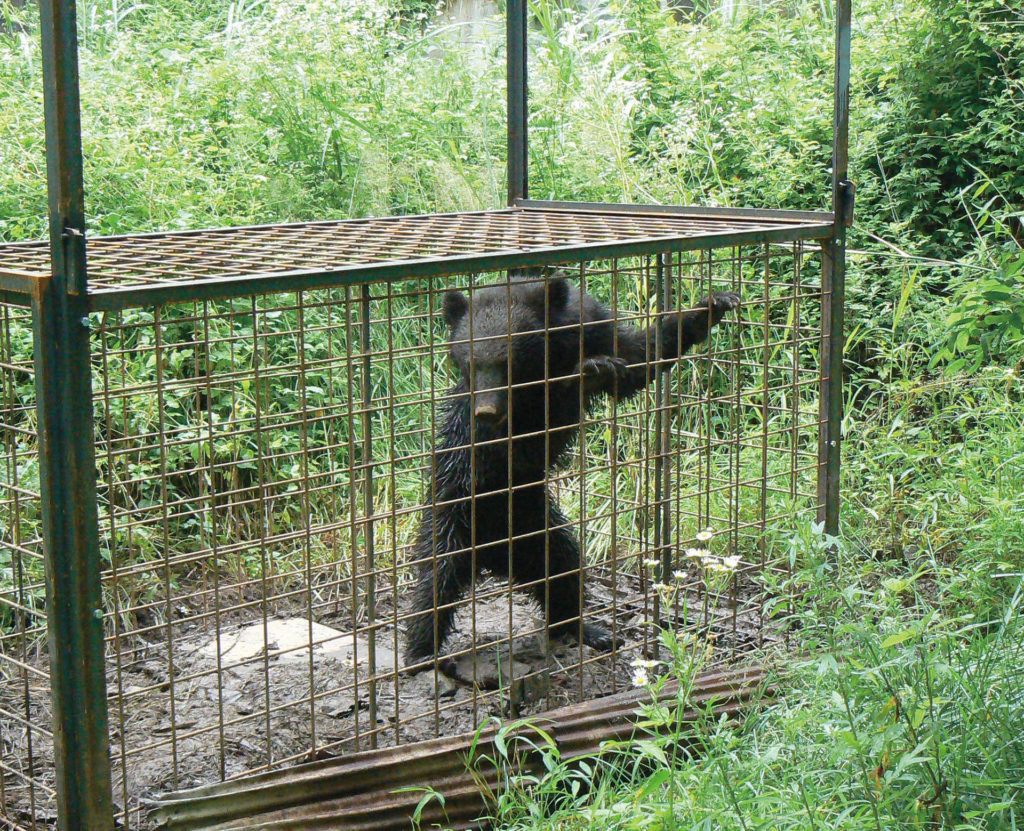
On average, more than 1,000 bears are killed each year just in damage control actions.
Most bear populations in Japan have somehow sustained themselves despite the death rate over the last few decades. If they hadn’t—all rather than just a few—of the remaining populations would be endangered or extinct.
The problem lies more in the fact that this lethal damage control method, which has been applied more or less across the board regardless of the health of specific bear populations, has failed to reduce damage to acceptable levels.
Nationwide, each year, people are still mauled or even killed, and damage to property still ranges in the hundreds of millions of yen, which fuels local demands for more kills. Clearly, more effective methods are required.
Unfortunately, the various levels of government have been very slow to allocate research funds and get interested in bear management and conservation issues.
In a way, the existing system has worked. There are thousands of conflicts each year, the majority of which require some sort of management action. Hunters work thousands of hours on a voluntary basis to control bear nuisances, partly because they can keep the bears they kill and profit from the sale of their parts.
They would quickly lose interest if non-lethal methods were more widely applied, and no amount of voluntary work could effectively replace them; there is just too much. Paying government workers might do, but because of the amount of work and expertise involved, it could actually cost more than the value of the damage itself.
Making farmers and other property owners more responsible, and encouraging them to use preventive methods such as electrical fences, might help, but may also simply shift damage to unprotected areas farther from the edge of the forests. There are many bears ready to risk their lives to get a stomach full of delicious, easy-to-harvest anthropogenic food.
In truth, the system is slowly evolving. The government is slowly getting more interested and involved, sometimes asking hunters to limit the number of bears they kill or encouraging property owners to use preventive methods; occasionally, even helping fund scientific research projects.
As a bear researcher, I am confident there will be at least some wild bears in Japan for a long time, but I am very worried about some local and isolated populations. A few of those are now partially protected and may recover, but others may disappear unless killing moratoriums are enforced at least until scientific research ascertains their health and determines sustainable harvest rates.
Bears have already disappeared from Kyushu and most of Shikoku and western Japan and current management approaches may not protect isolated populations further north. I hope stakeholders will begin meaningful discussions resulting in a consensus on the issues to ensure the long-term survival of bears in Japan.
JAPAN BEAR HIKES
Oscar started leading two-day summer bear-viewing hikes in the Japanese Alps in 2007 to help raise awareness and funding for the NPO he co-founded. So far all the participants have seen at least one bear and some as many as four. If you are interested in supporting the NPO’s bear studies and having a great time this summer with a knowledgeable guide, visit www.withoscar.com/viewbears (English) www.shinshukumaken.com (Japanese).