


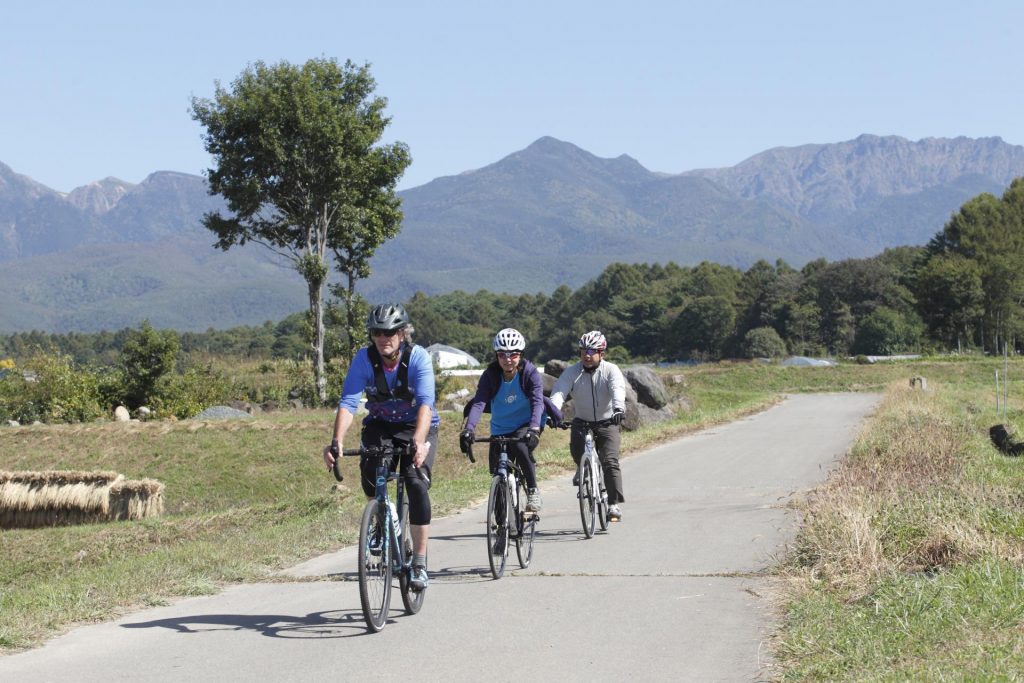
Japan is a cyclist’s country in ways that have nothing to do with mountains or scenery, though it has plenty of both. It’s a country of extraordinarily polite drivers, immaculately maintained rural roads, vending machines and convenience stores spaced perfectly for a mid-ride refuel, and a rail network happy to carry a bagged bike when your legs decide they’re done for the day. Layer onto that infrastructure a landscape running from volcanic coastline to alpine passes to island-hopping causeways, and cycling in Japan becomes one of the most underrated ways to see the country — slower than the Shinkansen, but closer to everything the bullet train flies past.
This guide covers where to cycle in Japan, the country’s standout routes, and what to know before you plan a trip around two wheels.
Why Cycle in Japan
Japan’s road cycling reputation has grown fast over the past decade, driven partly by government investment in dedicated cycling infrastructure and partly by word of mouth from riders who discovered how good the riding actually is. The country now has a genuine network of signed, mapped long-distance routes — most notably the government-backed Japan Eco Track program, which has developed courses across the country from Hokkaido’s Okhotsk coast to Shikoku’s Kochi coastline, Shikoku’s mountains and rivers, the Noto Peninsula, and the Miyagi-Kennan Hamakaido in Tohoku. Add e-bike rental now common even in rural areas, and cycling in Japan has become accessible to a much wider range of riders than the lycra-and-carbon crowd it once served exclusively.
Japan’s Best Cycling Regions and Routes
The Shimanami Kaido: Japan’s Most Famous Ride
No conversation about cycling in Japan skips the Shimanami Kaido — a roughly 70-kilometer dedicated cycling route across a chain of bridges connecting Honshu to Shikoku via the Seto Inland Sea’s islands. It’s the closest thing Japan has to a bucket-list cycling route: well-signed, well-supported, and genuinely spectacular, detailed in Shimanami Kaido — An Island Hopping Journey.
Tokyo and Kanto: City Rides and Escapes
Tokyo itself offers more cycling than its traffic reputation suggests, from urban routes to genuine countryside escapes within a short train ride — see Great Cycling Tours in Tokyo and, for a stranger side of the city, Tokyo Midnight Rambling. Further out, the pilgrimage route detailed in Chichibu Pilgrimage and the tea country roads of Suruga, by e-bike both show how much good riding sits within day-trip range of the capital.
Chubu and the Japan Alps
Japan’s mountainous heartland offers some of its most demanding and rewarding road cycling. Yatsugatake: Cycling Beneath the Eight Peaks and Exploring Mt. Fuji’s Foothills both cover classic alpine-adjacent routes, while The Sado Golden Trail takes riders to Niigata’s remote Sado Island for a genuinely different kind of ride.
Kansai: History on Two Wheels
Kansai’s dense concentration of historic sites makes it a natural fit for cycling, letting riders link temples, coastline, and countryside in a single trip — covered in Cycling Ancient Roads from Kyoto to the Sea and Kumano Kodo to Shionomisaki Cape, and the multi-day Lake Biwa loop covered in Lake Biwa Loop — A Journey Back to the Sengoku Era.
Shikoku and Kyushu
Beyond the Shimanami Kaido, Shikoku offers extensive coastal and mountain riding, covered regionally in Take a Trip to the Wild Side: From Kansai to Kochi. Kyushu’s volcanic landscape makes for dramatic riding as well, explored in The Aso and Takachiho Swing and Cycling Kagoshima’s Two Peninsulas.
Hokkaido and Tohoku: Wide-Open Riding
Hokkaido’s scale and light traffic make it one of Japan’s best long-distance touring destinations, covered in Northern Islands to the Tip of Japan and Tsugaru, Honshu’s True North. Tohoku, meanwhile, is home to some of the country’s most scenic autumn riding, from Okutadami to a full Tohoku coast-to-coast route.
Okinawa: Cycling Japan’s Subtropical South
At the opposite climatic extreme, Okinawa offers year-round cycling through a genuinely different landscape — see Okinawa: Cycling Japan’s Far Southwest and Blue Sky Meets Turquoise Sea.
Mountain Biking in Japan
Off-road riding has its own dedicated scene in Japan, anchored by resort towns that pivot from ski season to bike season. Madarao, in Nagano, has become one of the country’s leading mountain bike destinations, covered in The Samurai Trails of Mt. Madarao and Madarao’s Big 10 Trails. Niseko runs a similar seasonal pivot on Hokkaido’s snow, detailed in Niseko’s Twin Peaks Bike Park, while Izu’s network of trails, covered in Winter Mountain Biking on Izu’s Ancient Paths, offers year-round riding within reach of Tokyo. Regional overviews of Honshu’s MTB parks and Kyushu’s mountain biking scene round out the picture nationally.
When to Cycle in Japan
Spring (April-May) and autumn (October-November) are Japan’s premier cycling seasons — mild temperatures, cherry blossoms or foliage depending on timing, and generally stable weather. Summer brings serious heat and humidity to lower-elevation mainland routes, though higher-elevation rides in Chubu and Hokkaido stay comfortable. Winter cycling is largely limited to Okinawa and the southern islands, unless you’re specifically chasing the country’s snow-adjacent mountain bike parks in their off-season.
Planning Your Trip: The Practical Side
Japan’s trains generally require bikes to be bagged (rinko bags are the norm and widely available), which makes point-to-point touring and mixing rail with riding genuinely practical — a useful option if the weather turns or your legs need a rest day. Rental bikes, including e-bikes, are increasingly available even in smaller towns, and dedicated route signage on programs like Japan Eco Track makes independent touring more approachable than it might look on a map. A practical rundown of what to know before setting out is covered in Tips for Cycling in Japan.
Frequently Asked Questions
What is the most famous cycling route in Japan?
The Shimanami Kaido, a roughly 70-kilometer dedicated cycling route linking Honshu and Shikoku across the Seto Inland Sea, is widely considered Japan’s signature ride.
What is the best season for cycling in Japan?
Spring and autumn offer the most comfortable temperatures and best scenery across most of the country. Summer is hot and humid at lower elevations; winter cycling is largely limited to Okinawa.
Can I bring my own bike on Japanese trains?
Yes, as long as it’s bagged in a rinko bag, which is standard practice and widely available to buy or borrow. Unbagged bikes are generally not permitted on trains.
Is Japan good for beginner cyclists?
Yes. Well-maintained roads, polite drivers, widespread e-bike rental, and signed long-distance routes like the Japan Eco Track network make Japan approachable for riders of most experience levels.
Further reading: browse our full Cycling in Japan archive and Mountain Biking in Japan archive for route reports and regional guides.